The knowledge that leaves at the end of a shift
There is a kind of knowledge in industry that has never made it into a document.
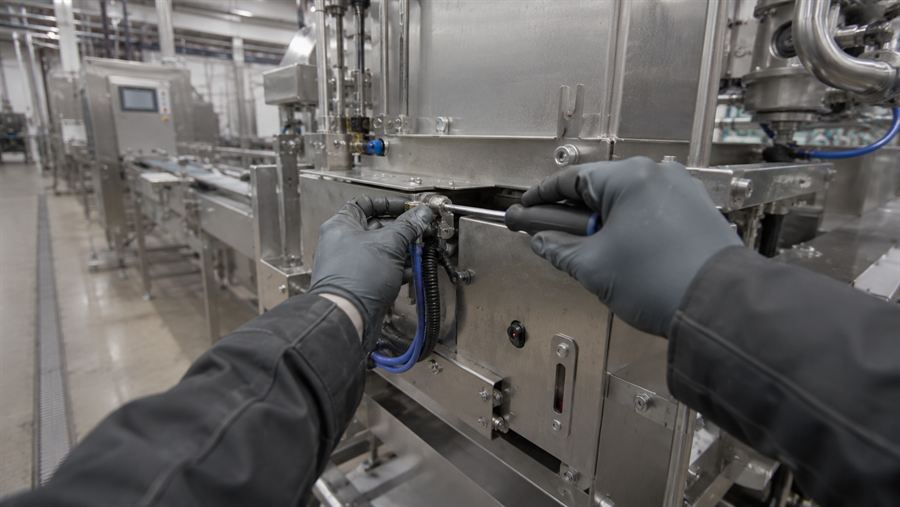
It is the technician who knows, from the sound alone, that a pump has about a week left in it. The operator who adjusts the line by an amount no procedure specifies, because the material came in slightly different this morning. The service engineer who checks one particular fitting first, every time, because fifteen years ago it cost them a weekend.
None of this is written down. Much of it could not be written down — ask the person to explain it and they will tell you they just know. It lives in their hands, their ears, their judgement. And it is, by a wide margin, the most valuable operational asset most industrial companies have.
It is also the one they are least able to protect.
When that technician retires, the knowledge goes with them. When the service engineer moves to a competitor, it goes there. When a site hires fifteen new people in a year, each of them spends months rediscovering things the company already knew — slowly, expensively, and sometimes unsafely.
Every industrial company we talk to recognises this immediately. Almost none of them have a way to do anything about it.
Why now
Two things have changed.
The first is demographic. The generation that built and ran much of our industrial base is leaving the workforce, and they are leaving faster than the knowledge can be handed over. This is not a future problem. It is happening on sites right now, and the handover window is closing.
The second is technical. It has only recently become possible to capture work as it actually happens — from the worker's own point of view, in video and audio, continuously and unobtrusively — and to make sense of what is in that capture. Egocentric data is the hardest data primitive in physical work. It is also the only one that contains the things nobody thinks to write down.
Put those together and there is a narrow, valuable window: the ability to preserve how skilled work is really done, from the people who still know how to do it.
What we believe
We built dotspot around a few convictions.
Knowledge belongs to the people and companies who created it. When a company captures how its people work, that is its operational know-how — not raw material for someone else's model. Nothing a customer records with us is used to benefit anyone else. This is not a policy we can imagine trading away later; it is the premise the company is built on.
Technology that adds work will not be used. We have all spent enough time on factory floors and at field sites to know what happens to a system that asks for one more form at the end of a shift. It gets worked around, and rightly so. Anything we build has to take work away, not add it.
The point is the people, not the footage. Capturing work is only the first step. The value is in what comes back: a new hire who gets to learn from the best person who ever did the job. A team that stops relearning the same lesson. An engineer who does not have to reconstruct what was already figured out three years ago.
And when robots and humanoid systems do arrive on industrial sites — and they will — what they learn from should be the accumulated expertise of the people who did the work, held by the company that employed them. Not a generic model trained somewhere else. The companies that capture their own knowledge now will have something that cannot be bought later.
Where we come from
We are three founders: mechanical engineers, an industrial designer, and people who have spent their careers in industrial software and large-scale digitisation. We are Norwegian, with industrial roots, which is a large part of why we approach this the way we do. We have seen enough technology arrive at a plant with a great deck and no plan for the shift it lands in.
We are building from Norway for a transformation that reaches a long way beyond it. We are optimistic about it. We also think how it is handled matters as much as whether it happens.
That is why we started.
— Marcus Horn, CEO & Co-founder, dotspot