The advantage you can't buy later
Every site has a person everyone goes to.
Not necessarily the most senior one. The one who knows this particular machine — who can tell from the sound that the alignment is off, who has a way of seating that part so it goes in first time, who remembers what happened the last time someone tried the obvious fix.
Everyone knows who that person is. Almost nobody can explain what they know.
That is the strange thing about operational knowledge: it is simultaneously the most valuable thing a site has and the least managed. Companies track spare parts to the individual bolt. They can tell you the service history of every asset. And the expertise that determines whether any of it runs well lives in a handful of heads, undocumented, one resignation away from gone.
We think that is the largest untapped asset in industry. Not because it is missing — it is there, in your people, right now — but because it is trapped at the level of the individual, when it could belong to the whole organisation.
That is what we mean by collaborative advantage.
Four places it shows up
Between shifts. Handover is where knowledge goes to die. The night shift dealt with something at three in the morning, resolved it, and wrote two lines in the log because they were tired and the next job was waiting. The day shift starts from those two lines. Everything else — what they tried, what the symptom actually looked like, the thing they noticed but were not sure about — is gone by the time they have driven home.
Between peers. Walk into any maintenance team and you will find specialisms nobody assigned. One technician is exceptional at calibration. Another has the touch for lubrication schedules and knows which points genuinely need attention rather than what the manual says. A third is the one you want replacing worn parts, because they can tell what else is about to go while they are in there.
None of that is in anyone's job description. And the value is not just each person's skill — it is knowing, across the team, which approaches work best in which situations. When that pattern becomes visible, the good practice that already exists somewhere in your team becomes the way the job is done everywhere in it.
Between senior and junior. A new technician learns from whoever is on shift, which means the quality of their training is close to random. Meanwhile the person who could teach them best is busy doing the work, because that is where they are most needed.
Between those leaving and those staying. This is the one that matters most, and the clock is running on it.
The generation that built and ran much of our industrial base is retiring. They are taking with them a depth of understanding about specific plants, machines and processes that took decades to accumulate. In most cases there is no mechanism at all for that knowledge to stay behind. A handover period of a few weeks, a colleague shadowing them for a while, and then it is gone.
What we have found, talking to people at this stage of their careers, is that they mind. Many have spent thirty years at a place they care about, and they want to leave it in good shape. They would like what they know to outlast them.
That is worth saying plainly, because it changes what capturing knowledge means. For an experienced worker, this is not being recorded. It is the difference between taking your life's work with you and leaving it to the people who come next — the people who will keep the plant running, and perhaps the place where their own grandchildren will work one day.
What the person doing the work actually gets
It is easy to describe all this from the company's point of view. But none of it happens unless the individual benefits, on an ordinary Tuesday, from the work being captured. So it is worth being specific.
No paperwork at the end of the job. The capture is the record. Nothing to write up, nothing to log afterwards, no form standing between finishing a task and going home. For most technicians this alone is the argument — it removes something they dislike rather than adding something new.
No phone call on a Friday evening. If you are the only person who knows how a particular system behaves, you are the person who gets called at home when it misbehaves. When that knowledge lives in the system, the night shift finds their answer without finding you. That value is invisible, but anyone who has taken that call knows exactly what it is worth.
Knowing what to bring before you walk out there. Ahead of a job, you can see what this machine has done before, what was needed last time, which tools and parts to take. Fewer trips back for something you did not know you needed.
And then the bigger one. The most common worry we hear is whether capturing what you know makes you replaceable. In practice the opposite happens: the tasks you have already mastered stop being the tasks only you can do, which is what frees you to take on the harder ones. Nobody grows while being the only person who can perform a routine job. What you teach the system is what stops owning your calendar — and what you do with the time that comes back is work that only someone with your experience can do.
When you run more than one site
Site-specific knowledge is specific by definition, but that does not make each plant an island.
People move more freely. When a site has a real system for bringing someone up to speed, moving a technician between plants stops meaning months of lost effectiveness. Your workforce becomes flexible in a way it simply cannot be when every site is learned from scratch.
Equipment knowledge transfers. The same machine sits on lines in different plants. If one site has become genuinely good at maintaining it and another has not, that difference is currently invisible and almost impossible to transfer. Made visible, it moves — machine by machine, practice by practice.
Production can follow demand. When one product takes off and another slows, the constraint on shifting production is rarely the equipment. It is that only one site knows how to make the thing well. When that knowledge is captured, a second site can take it on without rediscovering everything the first site learned the hard way. That turns knowledge capture into operational flexibility, which is a different order of value.
Why now, and not later
You might reasonably ask why this is urgent. The work will still be there next year. Some of the people will not.
Every month without capture is knowledge that leaves permanently. Not diminished — gone. There is no supplier you can buy it from, no consultancy that can reconstruct it, no model trained elsewhere that contains it. It is specific to your operation, and once the last person who held it has left, it cannot be recovered at any price.
We are not going to pretend this approach is a secret. We think capturing how work is done is simply where industry is heading, and your competitors will get there too. But that is exactly why the timing matters. This is not an advantage you hold by having thought of it first. You hold it by having captured more, from more of the people who still know, for longer. A head start on knowledge compounds — every month of capture makes the next month more valuable, and none of it can be bought in a hurry later.
And when the robots arrive
There is one more reason to start now, and it has nothing to do with nostalgia.
At some point robots and humanoid systems will be working on industrial sites — yours, or your competitors', probably both. When that happens, the question will be what they learn from.
The general capability will be bought off the shelf, by everyone, at a similar price. What will differ is whether a company has anything of its own to teach them: how this work is done here, with this equipment, under these constraints, including everything that only becomes obvious after twenty years.
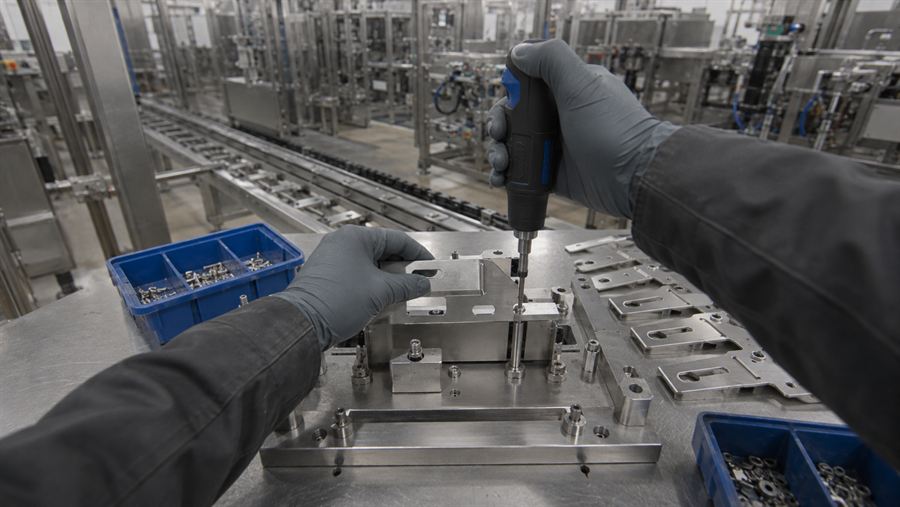
And here is the part worth noticing. The way a person wears a camera to capture how they work is the same way a robot perceives the work it does. First-person, visual, in context. That shared vantage point is not a coincidence — it is what makes knowledge captured from people usable by machines at all.
Which means the collaborative advantage you build between your people today is the same asset that carries forward when machines join them. Not a separate project, not a migration. The same knowledge, in a form both can use.
That is the advantage you cannot buy later. You can only keep it.
— Marcus Horn, CEO & Co-founder, dotspot